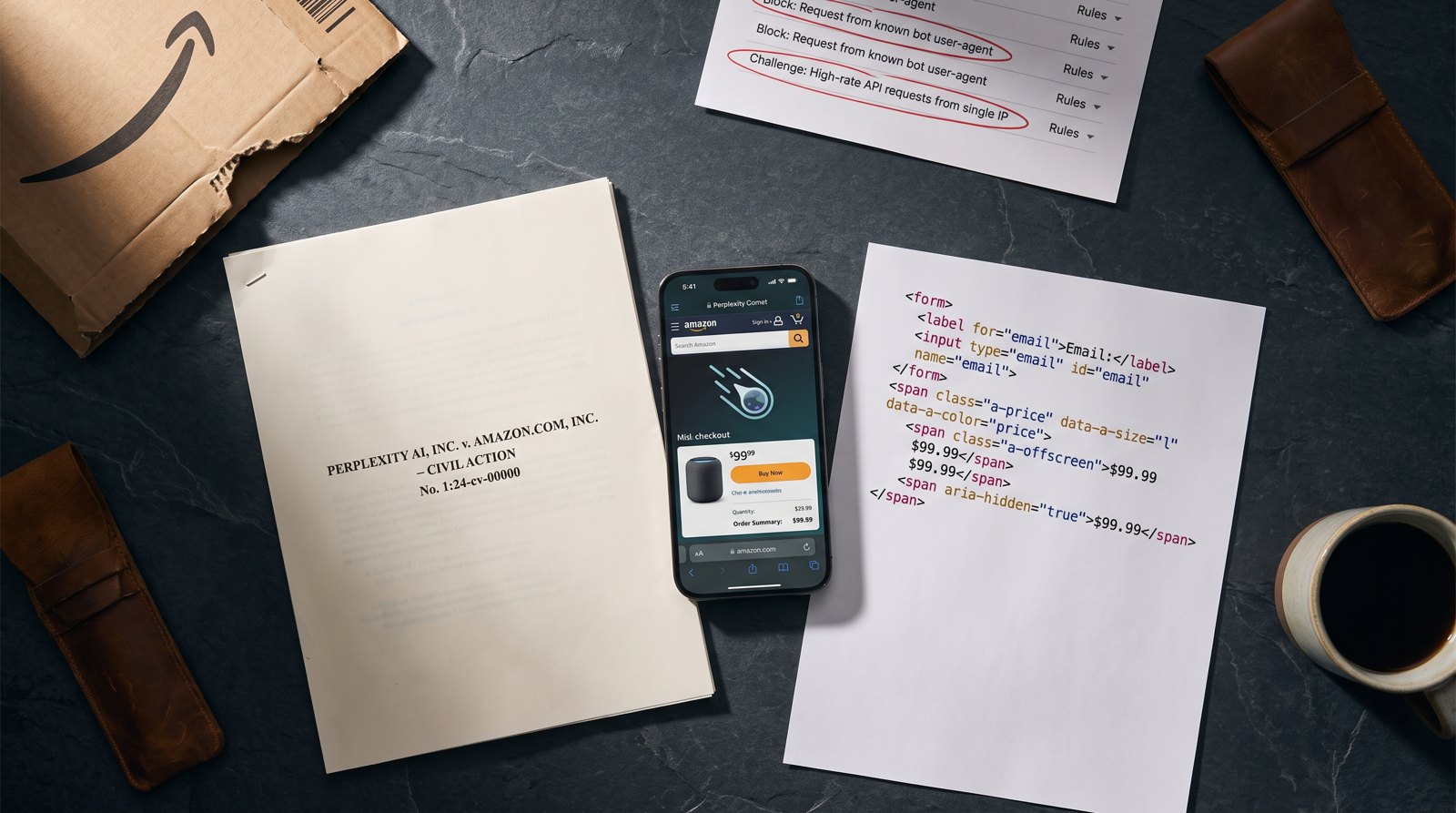
A US appeals court has overturned the injunction Amazon won against Perplexity's AI shopping agent, a dispute that started back in November 2025. The court's reasoning was that when the agent logs in and buys something, it is the person using it who is accessing Amazon, not the company that built the tool. It is reported as the first federal appeals court decision on whether AI agents can act on platforms on behalf of users.
Why this lands on your desk and not just Amazon's: if the biggest retailer in the country cannot easily block software that shops on a customer's behalf, then neither can your website. Not that you would want to, necessarily. But it changes an assumption most small business sites are built on, which is that a human with eyes and a mouse is the one filling in the form, reading the pricing page, or clicking through the booking flow.
Practically, a few things get more likely over time. Some of your visitors will be software acting for a real customer. That software does not see your layout, your photography or your carefully written headline. It reads the underlying code. So the things that used to be nice-to-haves start to matter more: clear, labelled form fields, prices and hours written as text rather than baked into an image, product or service details that are structured rather than buried in a paragraph, and a booking or enquiry flow that does not depend on hovering, animation or a pop-up appearing at the right moment.
The other side is bot handling. If you or your host block traffic that looks automated, that filtering may eventually catch a legitimate customer's assistant. Worth knowing what rules are actually in place on your site, because most owners do not.
Nothing here needs fixing this week. This is one court decision and the ground is still moving.
What to do: next time you speak to whoever maintains your site, ask two things. First, what is currently blocking automated traffic, and who set those rules. Second, whether your key information (prices, hours, services, contact details) exists as real text on the page. Both are cheap to check and useful regardless of how the AI agent question settles.
Reported by: