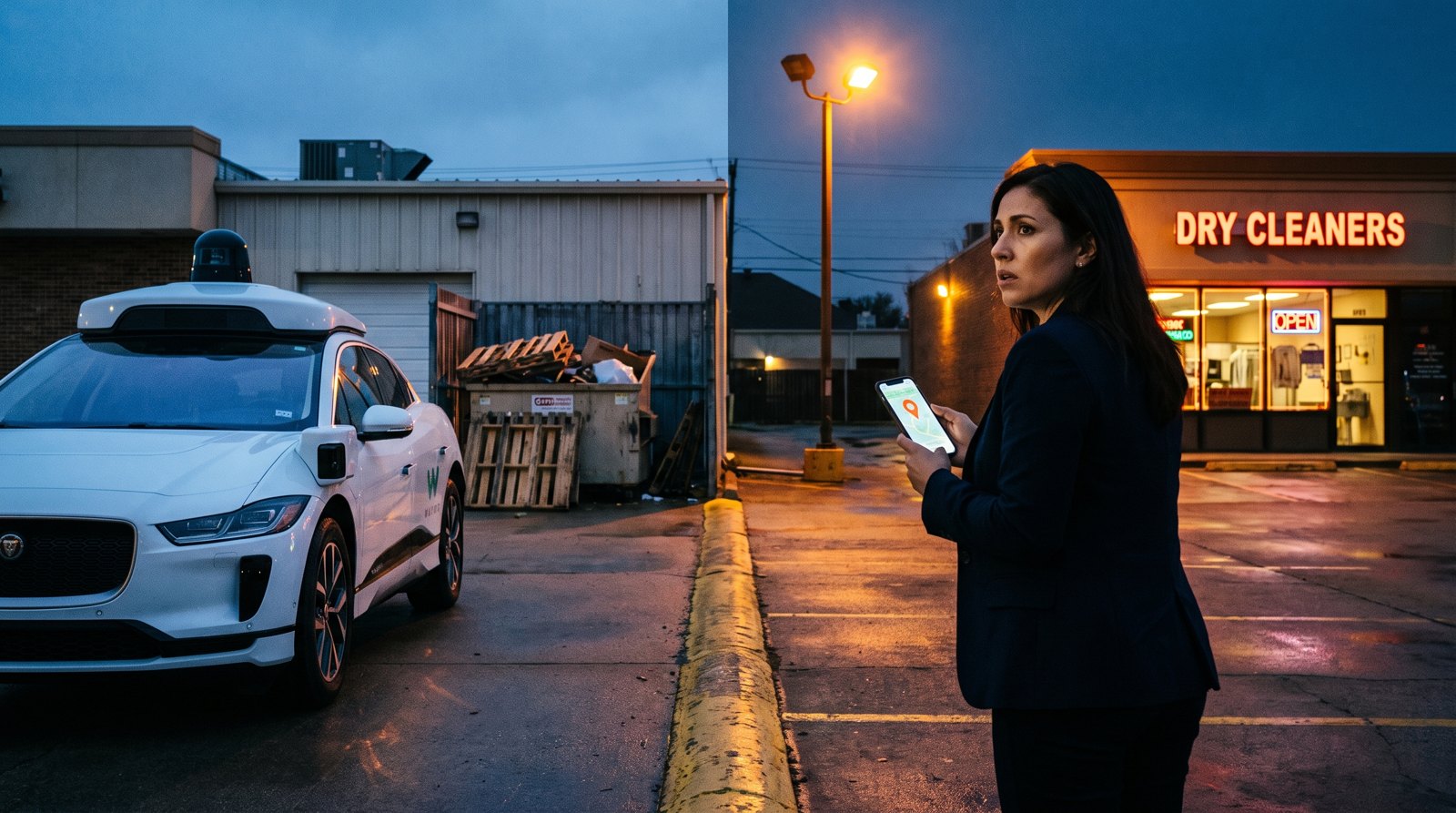
Waymo has stopped making people wait in line to use its driverless taxi service in Dallas, so anyone there can now book a ride. The company says it is running this service in more than a dozen cities as it pushes into the US, UK and Europe.
For a small business with a website, this changes nothing today. There is no setting to update, no plugin to install, no policy to read. It lands in the news because it is an AI story with a physical presence, and those get more attention than most software announcements.
But there is one thread worth pulling, and it has nothing to do with self-driving cars specifically. Every year, a larger share of your customers arrive somewhere by handing an address to a machine and trusting it. Rideshare drivers, delivery drivers, in-car navigation, phone maps. When the passenger is not the one steering, a slightly wrong pin on a map is no longer something a human quietly corrects. It becomes a customer standing in the wrong car park, calling you, annoyed.
That is a business systems problem, and it is fixable in an afternoon. Your address should be written identically on your website, your Google Business Profile, your Facebook page, your invoices and any directory listing you are in. If your building is hard to reach, say so in plain words on your contact page: which street to turn from, where to park, which door, what the sign looks like. If you share a car park with four other tenants, name the neighbours. If the map pin drops on the back of the building, fix the pin and mention it anyway.
None of this is glamorous. It is also one of the few things on a website that directly prevents a lost sale.
What to do
Open your own contact page and read it as if you had never been to your business. Then search your business name in maps on your phone and see where the pin lands. If either one would confuse a stranger, that is the fix. Ask your developer to tidy the contact page and your listing details next time you speak. Ignore the robotaxi part.
Reported by: