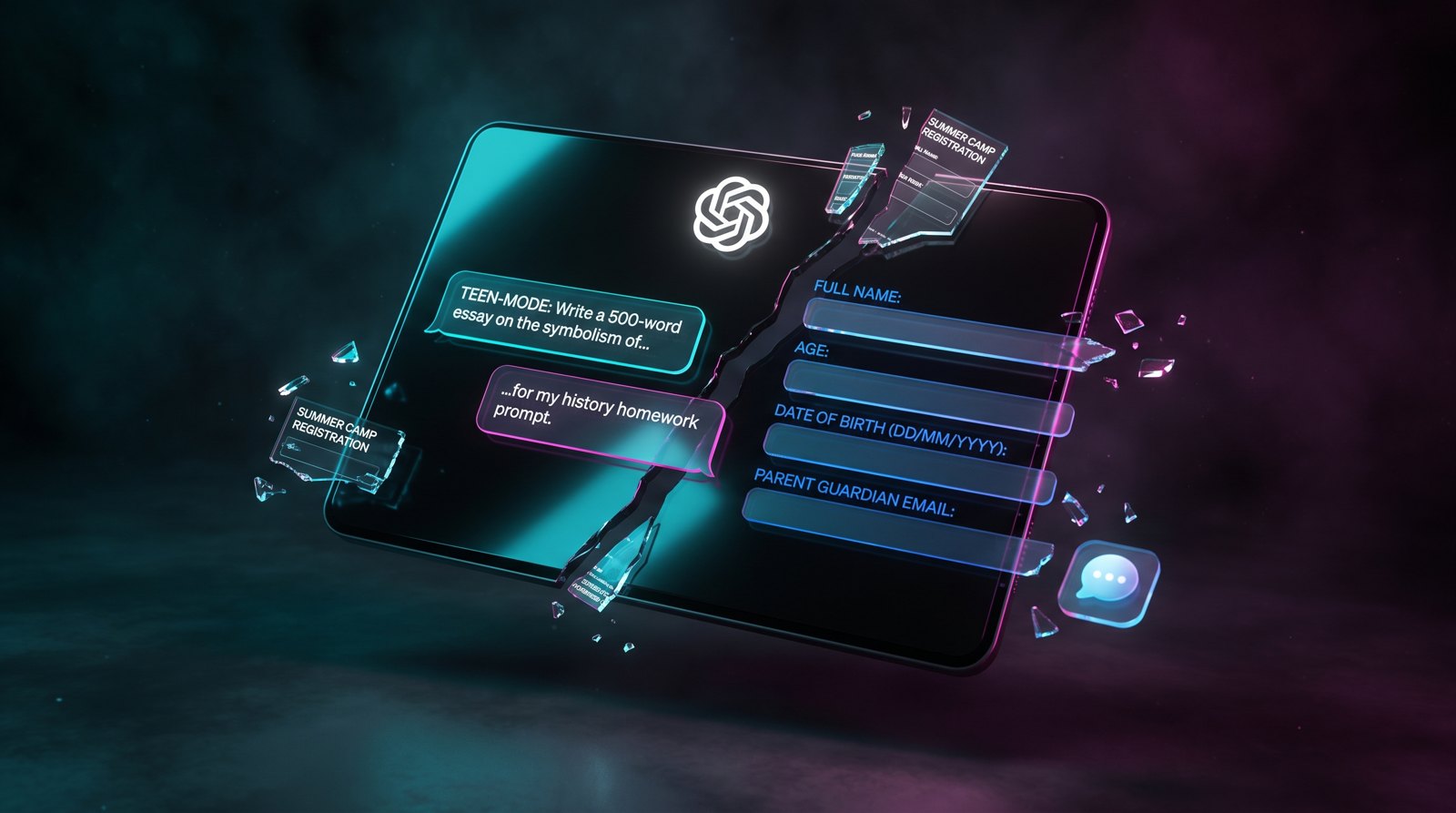
OpenAI has released a version of ChatGPT for teenagers aged 13 to 17, with tighter limits on topics like self-harm and sexual content, plus homework help designed to nudge students toward learning rather than handing over finished essays. Anyone who registers as under 18 gets put into it automatically.
For most businesses in North Phoenix, this changes nothing about your website. You do not need to update anything, and no setting on your site is affected.
The part worth noticing is the direction of travel. The reporting notes that other platforms are bringing in their own age checks and teen-specific protections. Age assurance (asking users to confirm or prove how old they are) is quietly becoming a normal expectation across the internet. If your business touches young people at all, that is likely to reach you eventually. Think tutoring, youth sports, dance and music lessons, summer camps, driving schools, anything where a teenager might fill in a form or send a message without a parent in the room.
Two practical questions follow from that. First, if you have an AI chat widget on your site, the little pop-up assistant that answers visitor questions, do you know how it behaves if a 14 year old starts typing into it? Most of these widgets have no age awareness at all. They will answer whoever is there. That is worth knowing about before it becomes a problem rather than after.
Second, if you collect names, ages, photos or contact details for minors through a booking or enrolment form, that data deserves stricter handling than your general mailing list. Who can see it, how long you keep it, and whether it ends up in a third-party tool you never really vetted.
What to do now: if your business has nothing to do with under-18s and no AI chat on the site, nothing at all. If either applies, put two items on the list for your next conversation with whoever maintains your site. Ask how your chat tool handles young users, and ask where information about minors is stored and who has access to it.
Reported by: