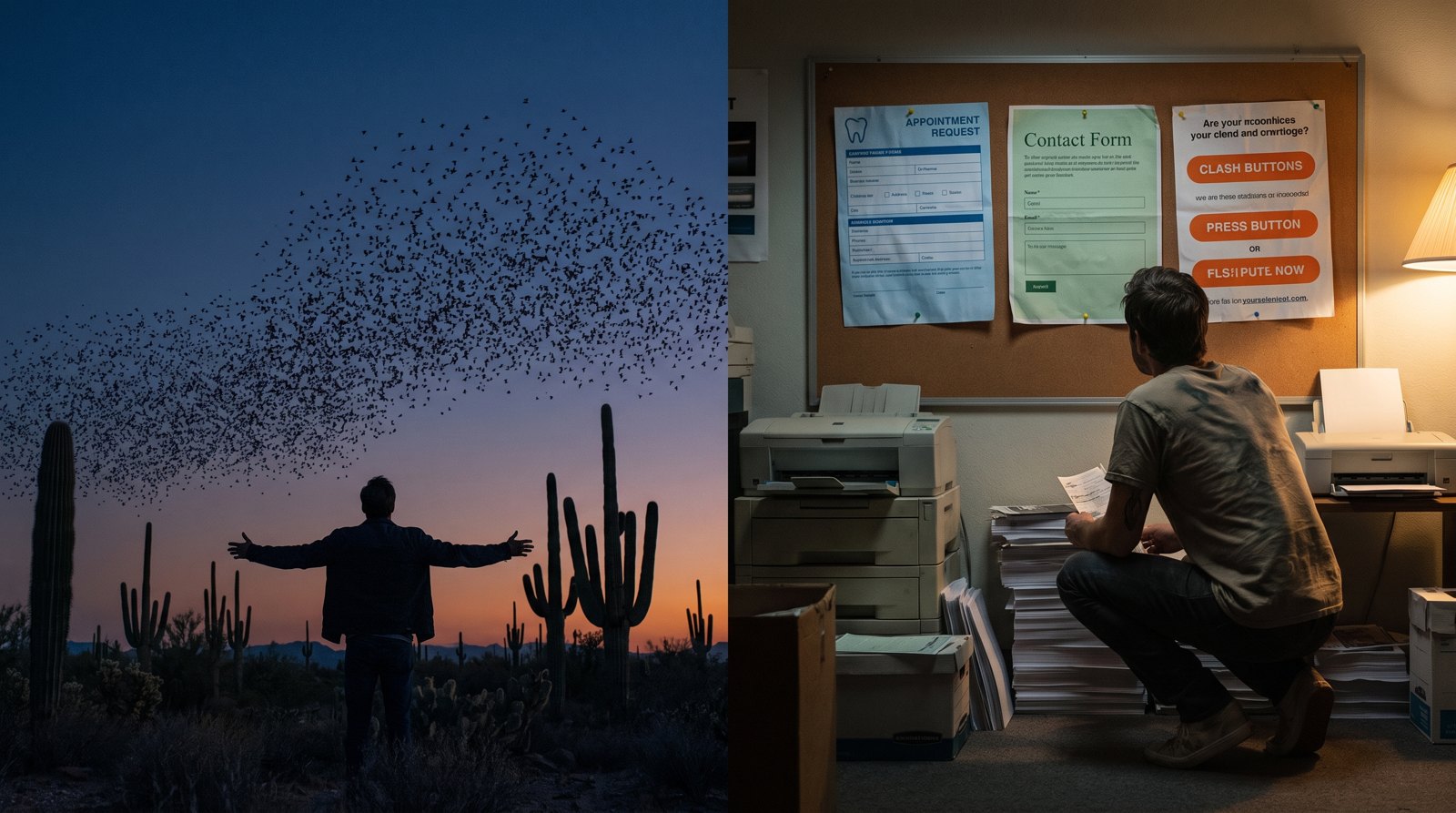
A piece went up on UX Collective arguing that design teams are managed too mechanically, and that they'd do better copying starlings. The author leans on a 2010 study from Rome's Institute of Complex Systems which found that each bird in a murmuration doesn't track the whole flock, only its six or seven nearest neighbours, following three simple rules: stay close, don't collide, move the same way.
Let's be honest about who this is for. It's written for people who manage designers, about manager burnout and what the author calls systemic design debt (the mess that builds up when nobody has time to fix the underlying structure). If you own a dental practice or a landscaping company in Cave Creek, none of this changes anything about your website. Nothing breaks. Nothing needs updating.
It gets attention because it names a real frustration, and that frustration does occasionally land on your desk. The complaint underneath the article is that teams which wait for direction from above move slowly, and teams that move fast without any shared direction end up building things that don't fit together. You have probably felt the second version without knowing what to call it: a site where the contact form looks nothing like the booking page, or where three different people added three different ways of doing the same thing over four years.
The author's answer is to pair the fast, local decision-making of starlings with the endurance of migrating geese, and calls it Structured Emergence. Whether that label sticks is not your concern. The underlying point is: fast decisions need a small number of agreed rules to keep them coherent.
What to do
Nothing today. But next time you commission work, ask one question: what are the rules everyone is working to? A short written answer (fonts, colours, button styles, how forms behave) is worth more than any methodology. If nobody can answer, that's the thing to fix, and it costs far less than a rebuild later.
Reported by: